Set the sample conditions first
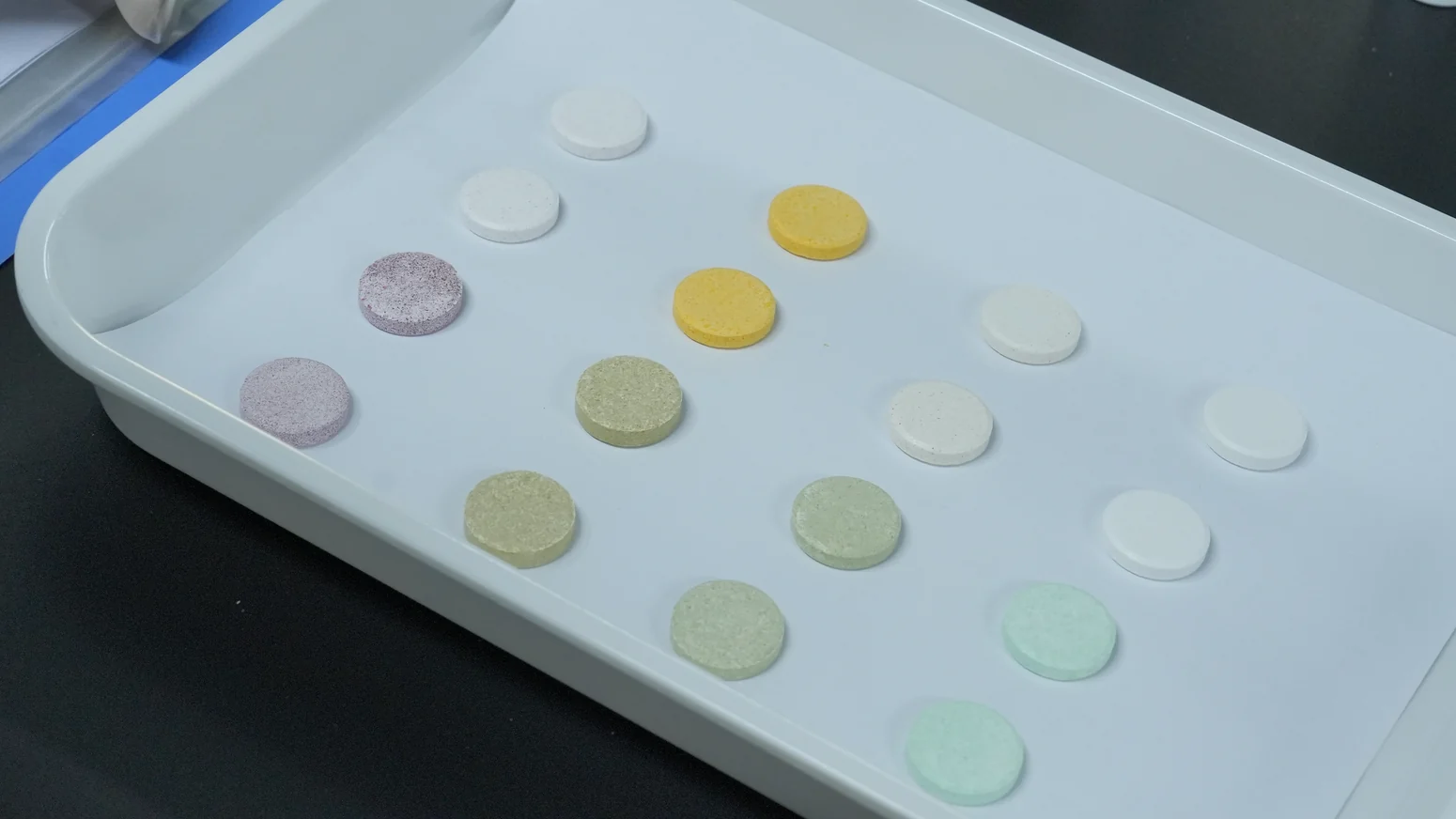
Use the same container, water volume and water temperature across samples. Record the number of tablets in the serving and whether the instructions call for stirring. Number or code the samples so notes can be matched to the correct formula.
Set a clear timing endpoint before you start. For example, record when no solid tablet pieces remain visible and make a separate note of any sediment. Keep the same endpoint for each trial.
Record dissolution, foam and the finished drink
Record the time against your chosen endpoint, then describe the foam, color and clarity. Note whether there are intact pieces, fine particles or sediment. This distinction gives the formulation team a clearer record of what you observed.
Taste each sample at the same dilution. Record flavor intensity, sweetness, acidity and aftertaste. If you test different water volumes later, record those as a separate comparison so the effect of dilution is visible.
Check the tablet and its tube together
Check that the tablet count fits the tube and that tablets can be removed as intended. Review closure and moisture protection options with the manufacturer, especially if the tube will be opened repeatedly.
Record tablet dimensions and the proposed pack count alongside the sample feedback. If the formula needs a different tablet thickness or serving count, check both the preparation directions and the packaging specification again.
Share sample feedback the formulation team can use
Send the sample identifier, test conditions, observations and specific changes you want. List priorities in order, such as faster dissolution, a stronger flavor or fewer tablets per serving. These choices help guide the next sample round.